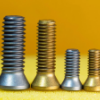
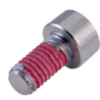
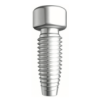
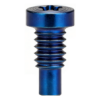
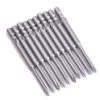
In the fastener market, screws come in a dazzling array of colors, including silver-white, golden, matte black, and iridescent hues. Many people mistakenly believe that electroplating is merely a cosmetic process for coloring. In reality, this thin coating serves as an "invisible armor" that enhances screw performance. Through electrochemical principles, electroplating deposits a layer of metal or alloy onto the screw's surface. This not only meets aesthetic requirements but, more importantly, improves critical properties such as corrosion resistance, wear resistance, and electrical conductivity. Behind this lies a precise set of process logic, where every step, from coating selection to parameter control, directly impacts the screw's service life and application suitability.
I. The Core Value of Electroplating: Beyond Aesthetics
The primary function of screw electroplating is far from mere decoration; it is a performance enhancement tailored to specific working conditions:
-
Corrosion Protection: This is the most critical function. Unplated carbon steel screws are prone to rusting in humid environments. The coating isolates the base metal from air and moisture. For instance, galvanized screws can withstand salt spray for 24 to 720 hours, catering to various environmental demands.
-
Enhanced Wear Resistance: For screws in mechanical transmission components, the coating reduces the coefficient of friction. Hard chrome plating, for example, can achieve a hardness of HV800-1000, withstanding high-frequency friction without significant wear.
-
Optimized Electrical Conductivity: Screws used in electronic devices must provide both connection and conductivity. Silver or copper plating reduces contact resistance, ensuring stable current transmission.
-
Assembly Assistance: Certain coatings (such as phosphating combined with oiling) adjust the coefficient of friction, resulting in more stable tightening torque and preventing slipping or breakage during installation.
Aesthetic enhancement is merely an added benefit. The different colors essentially reflect variations in coating materials or post-treatment processes, each corresponding to specific performance objectives.
II. Common Electroplating Types and Their Color Codes
Different electroplating processes create diverse colors for screws, each suited to specific application scenarios:
-
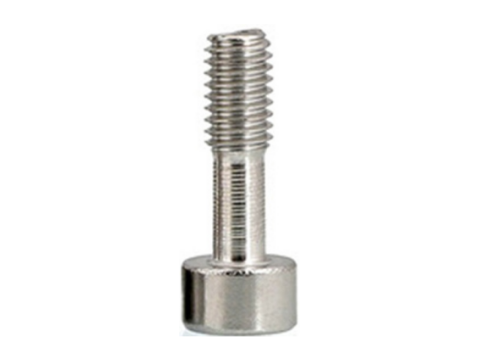
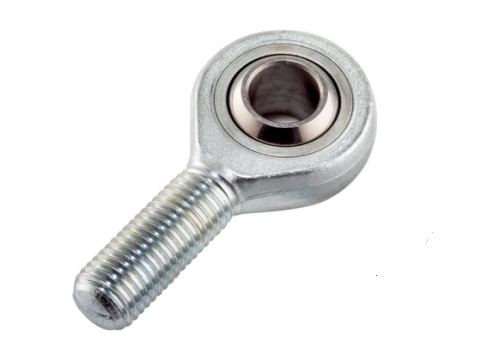
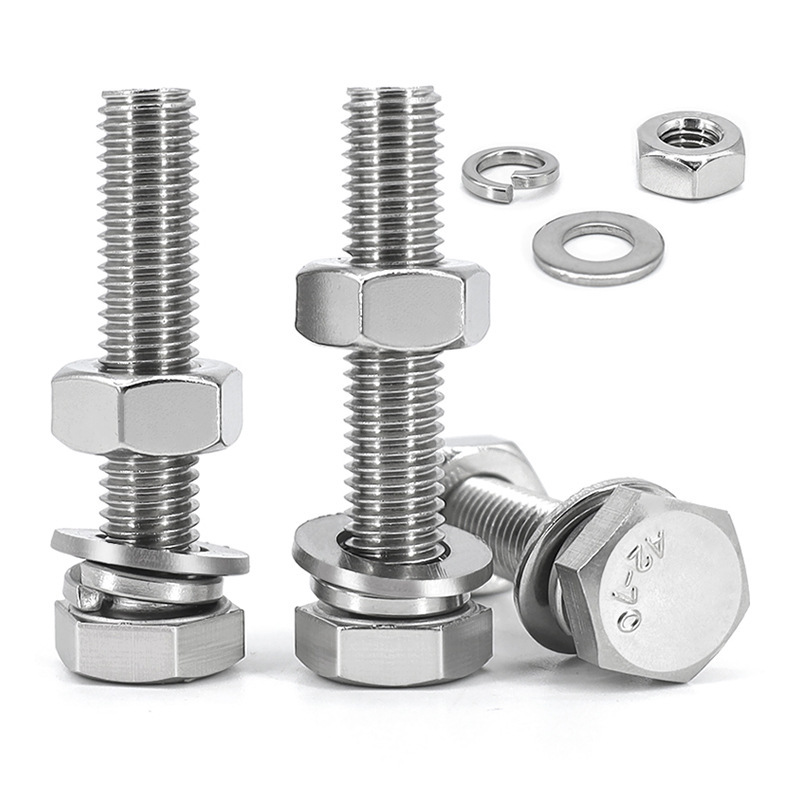
Zinc Plating: The "Corrosion Protection Workhorse" with a Silver-White Base
Zinc plating is the most widely used electroplating process, providing protection through electrolytic zinc deposition. The base color is primarily silver-white, which can be transformed into blue-white, iridescent, or black through post-treatments. Blue-white zinc plating (post-passivation) features a bright, clean appearance with a salt spray resistance of about 24-72 hours, making it ideal for home appliances and light industrial products. Iridescent zinc plating (rainbow passivation) offers superior corrosion resistance, lasting 96-200 hours, and is commonly used in automotive chassis and architectural hardware. Black zinc plating (black passivation) combines concealment with corrosion protection, suitable for internal mechanical components. Due to its low cost and high compatibility, zinc plating is the "standard protection" for carbon steel screws.
-
Nickel Plating: The "Precision Choice" with a Silver-Grey Texture
Nickel plating presents a uniform silver-grey color with a fine luster, available in bright nickel and matte nickel. Bright nickel achieves a mirror-like effect through the addition of brighteners and is often used for visible parts like furniture screws and electronic device casings. Matte nickel is non-reflective with a soft texture, making it suitable for medical equipment and precision instruments. Nickel plating offers excellent uniformity, effectively covering fine screw threads. Its corrosion and wear resistance surpass that of zinc plating, with a salt spray resistance of 100-300 hours. However, it is more expensive and typically used in mid-to-high-end applications.
-
Chrome Plating: The "Wear-Resistant King" with a Mirror Finish
Chrome plating exhibits a bright silver color and extreme hardness. Its wear resistance is 5 to 10 times that of zinc plating, and its smooth surface is easy to clean. It is divided into decorative chrome and hard chrome. Decorative chrome has a thin layer (0.005-0.01mm) and is used for automotive trim and bathroom hardware screws. Hard chrome features a thicker layer (0.05-0.2mm) and is applied to high-stress friction parts like engine piston pins and hydraulic valves. Behind the "mirror-like appearance" of chrome-plated screws lies exceptional wear and corrosion resistance, though the process is complex, highly polluting, and the most expensive among the options.
-
Special Electroplating: Function-Oriented "Color Customization"
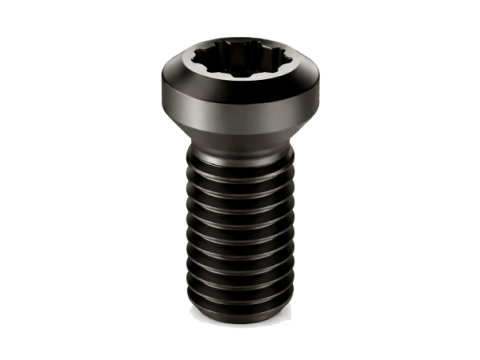
Beyond mainstream types, there are specialized electroplating processes: Copper-plated screws have a reddish-brown appearance and excellent conductivity, used for electrical wiring terminals. Gold-plated screws (usually with a thin coating) are golden, offering a combination of conductivity, corrosion resistance, and decoration, and are used in aerospace and high-end electronics. Blackening treatment (a chemical conversion film, not electroplating) is black and extremely cost-effective, suitable for low-requirement internal structural screws. Additionally, emerging eco-friendly electroplating methods, such as cyanide-free zinc plating and trivalent chromium passivation, maintain color and performance while reducing environmental pollution.
III. The "Secrets" of the Electroplating Process: Precise Control from Pre-treatment to Post-treatment
The success of screw electroplating depends on meticulous control throughout the entire process, which is the core differentiator in product quality among manufacturers:
-
Pre-treatment: The "Foundation" for Coating Adhesion
This is the most overlooked yet crucial step. Oil, oxide scale, and rust on the screw surface can cause the coating to peel or blister. Therefore, a four-step process of "degreasing → pickling → activation → water rinsing" is required. Degreasing uses alkaline solutions or ultrasonic cleaning to thoroughly remove residual oils from cold heading and machining. Pickling uses dilute hydrochloric or sulfuric acid to remove oxide scale. Activation eliminates the passive film formed after pickling, ensuring a tight bond between the coating and the substrate. Multiple water rinses are necessary to prevent residual chemicals from affecting the coating. Inadequate pre-treatment will compromise the coating's lifespan, regardless of how optimal the electroplating parameters are.
-
Electroplating Parameters: The "Core Code" Determining Coating Quality
Parameter control during electroplating directly affects coating thickness, uniformity, and performance:
-
Current Density: Each coating has a specific range. For zinc plating, it is 1-3A/dm². Excessive current leads to rough, burnt coatings, while insufficient current results in slow deposition and uneven thickness.
-
Electroplating Temperature: The optimal temperature for zinc plating is 20-30℃, and for nickel plating, 45-55℃. Temperature fluctuations affect coating crystallization and cause color deviations.
-
Electroplating Time: Calculated based on coating thickness. For example, achieving a 10μm zinc layer requires 20-30 minutes. Insufficient time compromises corrosion resistance, while excessive time makes the coating prone to peeling.
-
Electrolyte Composition: Metal ions, brighteners, and leveling agents must be regularly tested and replenished to maintain stability. Instability leads to dull colors and pitting.
-
Post-treatment: The "Crucial Finale" for Extending Coating Lifespan
After electroplating, screws undergo passivation, sealing, and drying. Passivation forms a dense film on the coating surface; for instance, rainbow or blue-white passivation after zinc plating can increase salt spray resistance by 3 to 5 times. Sealing involves soaking the screws in a sealing agent to fill microscopic pores in the passive film, further enhancing corrosion resistance. Drying requires controlled temperature (60-80℃) and time (30-60 minutes) to prevent residual moisture from causing re-rusting. Some high-end products also undergo oiling, which improves lubricity and adds an extra layer of protection.
IV. Electroplating Quality Testing: The Key to Identifying "Inferior Coatings"
High-quality electroplated screws not only have uniform colors but must also pass rigorous testing:
-
Visual Inspection: No peeling, blistering, pitting, or color differences, with complete coating coverage on threaded areas.
-
Thickness Testing: Using magnetic thickness gauges (for iron-based screws) or eddy current gauges (for non-iron-based) to ensure the coating meets standards (e.g., zinc plating ≥8μm).
-
Adhesion Testing: Passing bending or cross-cut tests without coating detachment.
-
Corrosion Testing: The neutral salt spray test is the core metric, with required testing durations varying based on application scenarios.
V. Development Trends in Electroplating Technology: Balancing Environmental Protection and Performance
As environmental regulations tighten and high-end manufacturing demands grow, screw electroplating technology is evolving towards "low pollution, high precision, and multi-functionality." Cyanide-free electroplating is gradually replacing traditional cyanide-based processes to reduce environmental hazards. Composite electroplating (e.g., nickel-based silicon carbide composite coatings) combines wear and corrosion resistance for harsher working conditions. Intelligent electroplating production lines utilize automatic temperature and current control to ensure consistent coating quality.















 Login
Login








 Contact
 WeChat
 粤ICP备2025493240号-1