Fasteners are essential components in manufacturing, widely used in automotive, aerospace, electronics, construction, and renewable energy sectors. Understanding API Standards for Fasteners is a common question engineers and procurement specialists encounter. This article provides a systematic answer covering technical principles, selection methods, and practical guidelines.
From a technical perspective, this topic involves materials science, tribology, and surface engineering. Understanding the underlying principles helps engineers select appropriate fastener specifications, strength grades, and surface treatments during the design phase, preventing assembly failures and safety hazards.
In practical applications, evaluate working conditions including load type, ambient temperature, corrosive media, assembly space, and maintenance requirements. For critical joints, verify mechanical performance per ISO 898-1 standards and recheck torque after assembly.
Toprecision provides comprehensive solutions from standard parts to custom-engineered fasteners, covering high-strength bolts, micro screws, wire thread inserts, and self-clinching fasteners for EV, robotics, and AI server applications. Contact our engineering team for support.
1. Overview of the API Standard System
API standards cover product specifications, recommended practices, and test methods. Key standards closely related to fasteners include:
-
API Spec 6A / ISO 10423: Specification for Wellhead and Christmas Tree Equipment — One of the most critical and stringent standards, applicable to fasteners on wellheads, Christmas trees, manifolds, and related control equipment.
-
API Spec 20E/20F: Alloy and Carbon Steel Bolting for Use in the Petroleum and Natural Gas Industries — Product specifications specifically for bolts, nuts, and studs, providing detailed fastener requirements that complement equipment standards like API 6A.
-
Other Relevant Standards: Such as API 17D (Subsea Equipment) and API 600/602 (Valves), which also contain referenced requirements for fasteners.
2. Interpretation of Core Requirements
(1) Material and Manufacturing Process Requirements
-
Material Grades: API 20E/20F explicitly defines the chemical composition, heat treatment, and mechanical property requirements for different strength grades (e.g., L7, L7M, L43) and material types (alloy steel, stainless steel). For instance, L7 is commonly used in low-temperature conditions, while L7M is often used in sour environments.
-
Materials for Special Conditions: For sour environments containing hydrogen sulfide (H2S), materials must meet Sulfide Stress Cracking (SSC) resistance requirements. This typically references the NACE MR0175/ISO 15156 standard, which imposes strict limits on material hardness, maximum strength, and heat treatment conditions (e.g., HRC limits of 22 or 34).
-
Manufacturing Process: Fully threaded studs are generally required to have rolled threads, while bolts may be machined or forged. Heat treatment (quenching and tempering) is mandatory to ensure uniform performance.
(2) Dimensions and Tolerances
API standard fasteners typically use imperial UN or 8UN thread series, with dimensional specifications following standards such as ASME B1.1. Tolerance requirements are stricter than those for ordinary commercial-grade fasteners.
(3) Mechanical and Performance Testing
Comprehensive testing is required along with test reports, typically including:
-
Tensile Testing: Determines tensile strength, yield strength, elongation, and reduction of area.
-
Impact Testing: Charpy V-notch impact testing is a hallmark requirement of API standards, used to evaluate material toughness under low temperatures or harsh conditions. Specific minimum impact energy values are required based on material grade and service temperature.
-
Hardness Testing: Brinell or Rockwell hardness tests conducted on the head or end face of the product to check for hardness uniformity. Thread gauge inspection is also required.
-
For Nuts: Proof load testing and hardness testing are required.
(4) Marking and Traceability
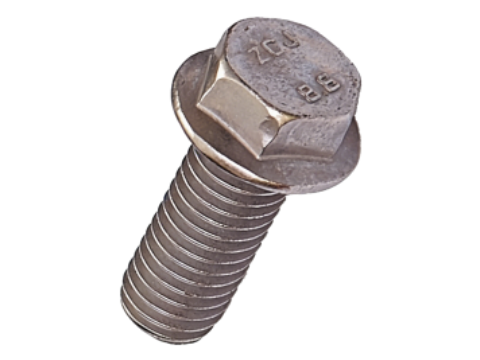
This is the lifeline of API-certified products. Every compliant API fastener must have clear stamped markings, typically including:
-
Manufacturer's identifier or trademark.
-
Material grade (e.g., L7, B7, B7M).
-
Size specification.
-
Heat number or a unique traceable code.
These markings enable full traceability from raw materials to finished products, and from performance test reports to specific parts. This is one of the core requirements of the API Q1 quality management system (API Quality Program Specification).
(5) Certification and Declaration of Conformity
Manufacturers must operate under the API Q1 system, and their Declaration of Conformity (DoC) carries authoritative weight. When purchasing, customers should require suppliers to provide a Material Test Report (MTR) that complies with API standards. This report must include all necessary chemical composition and mechanical property data and correspond exactly to the markings on the products.
3. Selection and Practical Recommendations
Yongjing Precision Technology Co., Ltd. advises customers to:
-
Define Operating Conditions: First, determine the specific API standard number followed by the equipment, pressure ratings (e.g., PR2 for API 6A), temperature classes (e.g., LU, LUM, LC), and whether sour environments (H2S partial pressure) are involved.
-
Select Materials Accurately: Choose the correct material grade based on operating conditions (e.g., B7 for general high-temperature/high-pressure applications, B7M for sour environments). Substituting with ordinary Grade 8.8 bolts is strictly prohibited.
-
Verify Markings and Documentation: Upon receipt, it is essential to verify that the stamped markings on the actual items are clear and complete, and consistent with the information provided in the supplier's MTR.
-
Professional Storage and Installation: As critical components, API fasteners should be stored properly to avoid corrosion and mixing. During installation, follow standard procedures and use calibrated torque tools to ensure accurate preload.
Conclusion: API standards represent not just a set of technical parameters, but a culture of safety and a system of responsibility. Through rigorous material specifications, comprehensive performance testing, and strict traceability requirements, they build a solid defense line for safe oil and gas production. As manufacturers or users, deeply understanding and strictly implementing API standards reflects our responsibility toward life, the environment, and assets. Yongjing Precision Technology Co., Ltd. is committed to providing customers with safe, reliable, and fully traceable high-end fastener products and services in accordance with API standard requirements.


 135-6073-0094